
Decoding African Fabrics and Prints: The Story Behind the Style
African prints play a central role in Afrocentric fashion, but there’s more to these compelling designs than meets the eye. Once you know their stories, you’ll love them that much more.
If you follow black women’s fashion trends, you’re familiar with African prints—those bold, beautiful designs that give women’s clothing a decidedly Afrocentric vibe. Executed in bright, eye-catching colors or high-contrast black and white, they’re sometimes referred to as “ethnic prints” or “tribal prints.”
But just as there are multiple African cultures, there are multiple types of African prints. Here are just some of them by name, along with their history and significance.
Kente
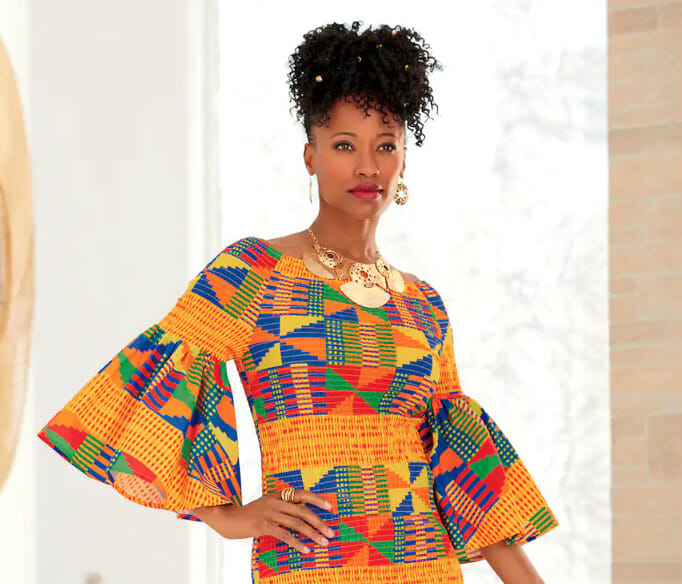
Kente cloth patterns are characterized by a bright mix of colors and geometric shapes, interwoven in contrasting bands or blocks. The pattern is based on traditional kente cloth, a handwoven silk and cotton fabric that originated in 17th century South Ghana.
According to Ashanti legend, kente cloth was created by two hunters who came across a giant spider spinning a magnificent web. They were so awestruck by its beauty, they decided to recreate their own version—and thus kente cloth was born. They presented their creation to the Ashanti king, and from then on, kente cloth became the fabric of royalty.
Making authentic kente cloth is labor intensive. First, 4″ strips of fabric are woven on a slim wooden loom, in colorful stripes, shapes and textures. Then, multiple strips are sewn together in intricate patterns to create the elaborate woven cloth.
Today, kente cloth prints are a popular component of women’s Afrocentric fashion. You often see kente cloth patterns used as trim on dresses, tunics and pants—say, to accent hems, sleeves and necklines—and to make stunning headwraps and scarves.
Ankara Prints (aka Wax Prints or Batik)
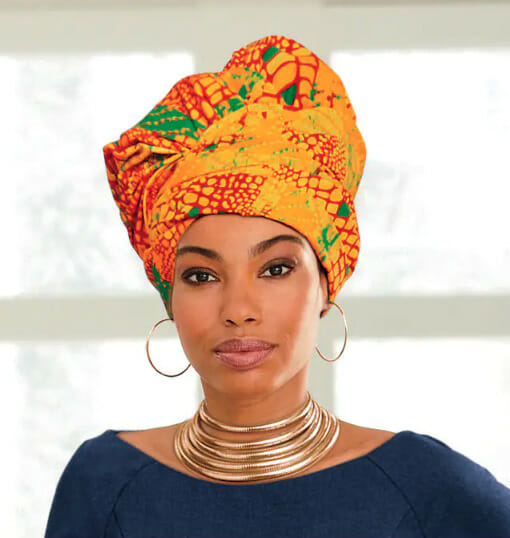
If you love particularly bright, vivid colors and spectacular designs, you’re probably drawn to Ankara print clothing.
This technique of wax-resist dying actually didn’t originate in Africa. West African mercenaries working in Indonesia in the mid-19th century brought the technique back with them, then took it to another level with bright African colors and traditional motifs.
In authentic wax printing, the wax is melted and meticulously applied to the cloth by hand, which is then dyed in a vivid hue. This wax-and-soak process is repeated multiple times with various colors, creating intricate multi-colored patterns. Different cultures around the world developed their own variations on wax printing.
Wax print patterns include florals, animal motifs, geometrics—you name it. In Afrocentric fashion circles, Ankara prints are frequently used to create caftans, free-flowing dresses and more.
Mudcloth
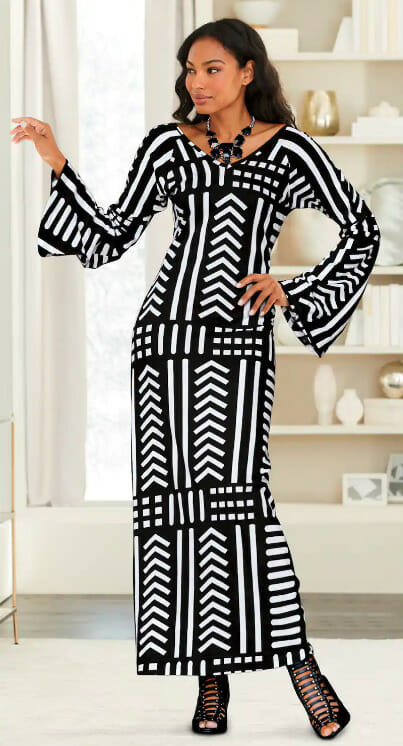
Yes, in the beginning, mudcloth was made using real mud—riverbed mud that was fermented in clay jars for up to a year, to be exact.
Today, we associate mudcloth prints with bold geometric designs executed in black, and set on a white or solid-colored background. But the original mud cloth was white with brown patterns, the color left behind by the mud’s pigment.
Mudcloth was originated by Mali’s Bamana culture, back in the 12th century. Traditionally, men would weave strips of fabric on narrow looms, and once the strips were stitched together into lengths of cloth, women would dye and paint the fabric.
They would paint intriguing combinations of lines, circles and other shapes, repeating their pattern over the entire cloth. Each pattern would tell a story, but only to those who understood the meaning of the symbols.
Mud cloth was originally a show of status, and many African American woman still wear mud cloth prints with pride. You’ll find these sophisticated patterns (usually in black and white) on Afrocentric dresses, tops, pant suits and more.
Dashiki (aka Angelina Prints)
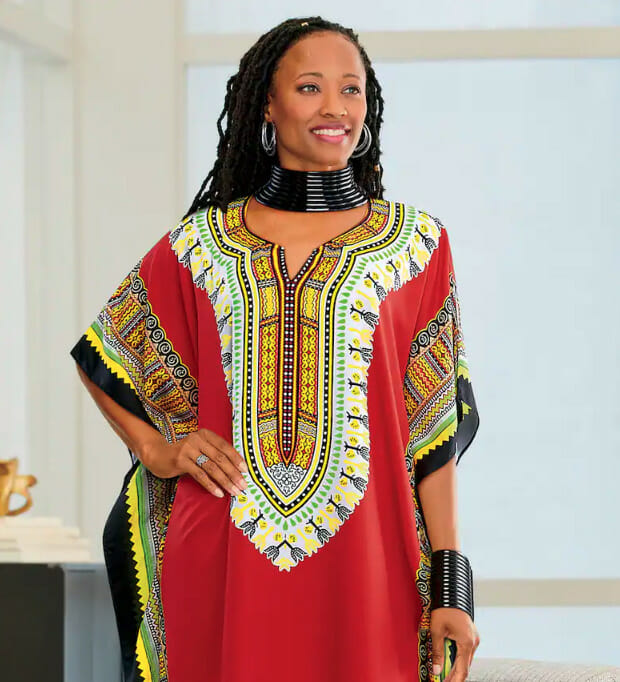
You’re undoubtedly familiar with the dashiki—a long, loose shirt featuring a colorful design along its V-neck, sleeves and hem. Originally worn by West African men, the dashiki became popular in the U.S. during the Civil Rights movement, and it’s been associated with black pride and unity ever since.
These days, dashiki prints are found on much more than men’s shirts. You can find variations of the classic dashiki design on modern caftans, dresses, tunics and women’s pant suits.
While some dashiki prints are very colorful, others are more muted. So, if you’re new to the world of wearing African prints, dashiki prints might be a great place to get your feet wet.
Animal Prints
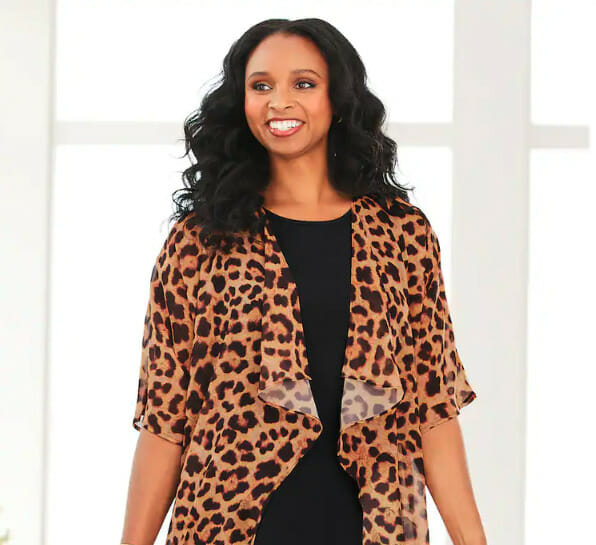
Animal print clothing is not an African print, as such. However, you do see a lot of it in Afrocentric fashion, and elsewhere, too. It’s never out of fashion.
As you’d expect, today’s animal print clothing is the 21st century equivalent of our ancestors’ wearing of animal pelts. In South Africa’s Zulu culture, for example, the aristocracy prized leopard skins.
Cheetahs, zebras, giraffes…many of the world’s most popular animal prints originate with magnificent animals native to Africa. Often, it was believed that wearing the skin of a certain animal would transfer that animal’s power to the wearer.
Today, however, animal prints are more about creating a sense of fun. They’re exotic. They’re sexy. They take a little confidence to wear, but they’ll give you some confidence, too. You can find animal print clothing in just about every Ashro department, from dresses and tops to shoes and bags.
In short, African prints are beautiful, flattering and fun to wear. Best of all, like all afrocentric fashion, they’re a stylish way for black women to pay tribute to their heritage while looking fabulous. Best of all, you’ll feel as great as you look.
More from Ashro Blog

15 responses to “Decoding African Fabrics and Prints: The Story Behind the Style”
-
I love your collection. I have bought many pieces
-
Thank you for the feedback Joyce! We’re happy to hear you enjoy our collection 😊
-
-
Searching fot info on patterns and designs for Juneteenth celebration in Lexington Va and voila your BEAUTIFUL offerings came up !
I hope I can do them justice on a piece of artwork honoring Desmond Tutu!!
Blessings
Claudia … hooked on learning all about the meanings you shared for each design !!!-
Claudia thank you for sharing! Juneteenth is the perfect time to tell the story behind beautiful African fabrics and prints. Please share your Juneteenth celebration photos with us on Facebook or Instagram!
-
-
Thank you for suggesting dashiki shirts as a way to get into the African fabric world. I recently made some friends with a few neighbors that have African heritage, and I wanted to try gifting them some clothes that I can wear myself so they know I respect them. I’ll look for any stores that offer custom African clothes like dashiki shirts and start from there.
-
Where does Ashro get their fabrics? I love the styles.
-
I love the shoes, where can I find them?
-
Angelina how much is it
-
I loove the animal prrint shoes are tthose still available for purchase? Is there a catalog?
-
How can I get to order Georgia Dress item number 0Q715999 size 12 from 2009 collection?
-
Hi Pat, unfortunately we don’t carry this item anymore. Hope you are able to find something similar in our current collection. Thanks for your interest!
-
-
Ordered the Aubrie dress; headwrap is not available. Do you know if that fabric/print is? O yes, I already have those orange shoes (BMW)
-
Hi Betty, No the fabric/print is not available. Sorry about that. Thanks for ordering the dress.
-
-
I will luv to have that outfit the black and with one
-
Thanks for the comment Elizabeth!
-
Categories: Afrocentric Fashion
Tags: suppress

Leave a Reply